|
From small family gatherings to the largest corporate event, Atlantic Coast Entertainment
can provide your group with non-stop fun for every age range. From three-legged
races to tug-o-war to the ever popular water balloon toss there is excitement
and fun for everyone. Below there is some ideas for outdoor fun. If you don't
see what you're looking for, please give our office a call and one of our knowledgeable
staff will give you plenty of ideas to make that outside event a success.
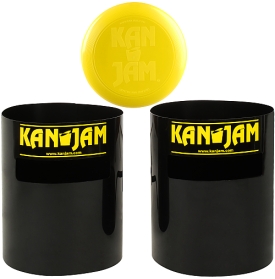
Kan Jam
Kan Jam ® is a 4 player
disc game, similar to bean bag toss played with a disc instead of bean bags
that uses teamwork to score. The object of the game is to score points as a
team by throwing the disc in the goal ("kan"). Instead of just throwing the
disc back and forth in the backyard, Kan Jam ® provides hours of fun with a
target to throw toward and the challenge as a teammate of redirecting an
errant toss on the other end.
Kan Jam® just got that
much cooler. Download the Kan Jam® app to get rules, how-to videos and a
super easy to use scorekeeper! This set is lightweight and easily portable,
making it the perfect game for tailgating, camping, backyard, and the beach.
How to play:
Set up the goals ("kans")
50 feet apart.
Two teams of two.
Teams take turns
throwing/deflecting the disc toward the goal.
Play to 21 points.
Scoring:
Instant win: Throw the
disc inside the kan through the small front slot opening
2 points: Throw the disc
to strike the kan, unassisted by teammate
3 points: Teammate
deflects the disc throw inside the kan
1 point: Teammate
deflects the disc throw to hit the kan
Features:
-
2 durable official
goals ("kans")
-
Custom designed 168
gram disc
-
Detailed scoring
guide and instructions
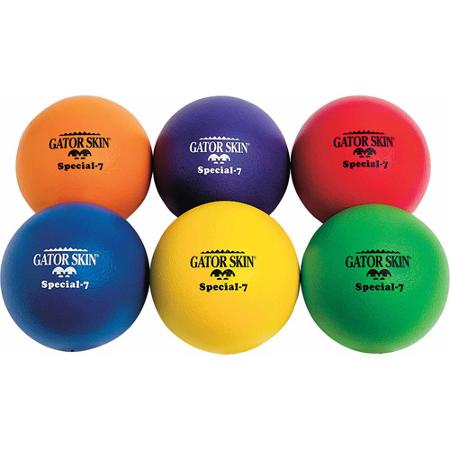
Dodgeball
(Regulation) Materials
Needed:
How To Play: Two teams, each team gets ten players per round. Each team must be at least 3 players within 10 yards of the dividing line.
Players must never cross the dividing line. First team to completely eliminate the opposing team wins that round; first team to win 10 rounds wins the match.
To eliminate a player you must hit him with a ball or catch a ball he has thrown.
Once a player is hit he must sit on the sidelines for the remainder of the round
If a teammate catches an opposing player's throw he may designate one teammate who is out to return to the game
Players who hit someone in the head must sit out the current round and the following round, with no substitution
Note: a regulation dodge ball is a rubber ball 8 and 1/2 inches in diameter. 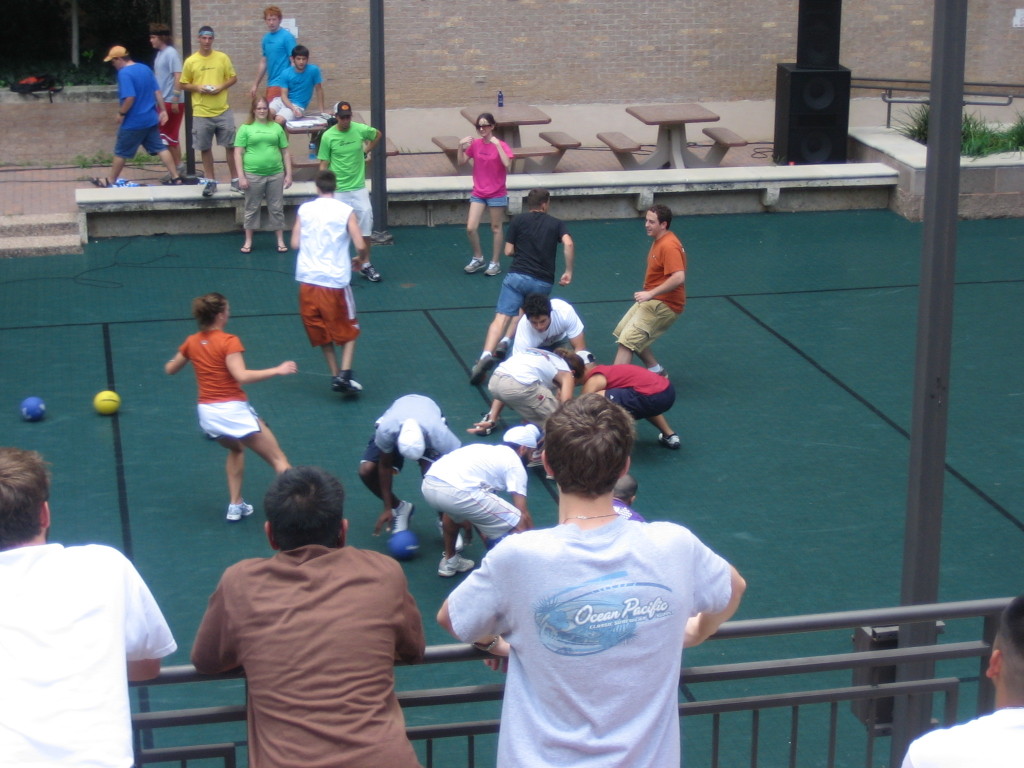
Dodgeball
 Dodgeball
(Balls of Fury) Materials
Needed:
How To Play: Two teams, each team gets ten players per round. Each team must be at least 3 players within 10 yards of the dividing line.
Players must never cross the dividing line. First team to completely eliminate the opposing team wins that round; first team to win 10 rounds wins the match.
To eliminate a player you must hit him with a ball or catch a ball he has thrown.
Once a player is hit he must sit on the sidelines for the remainder of the round
If a teammate catches an opposing player's throw he may designate one teammate who is out to return to the game
Players who hit someone in the head must sit out the current round and the following round, with no substitution
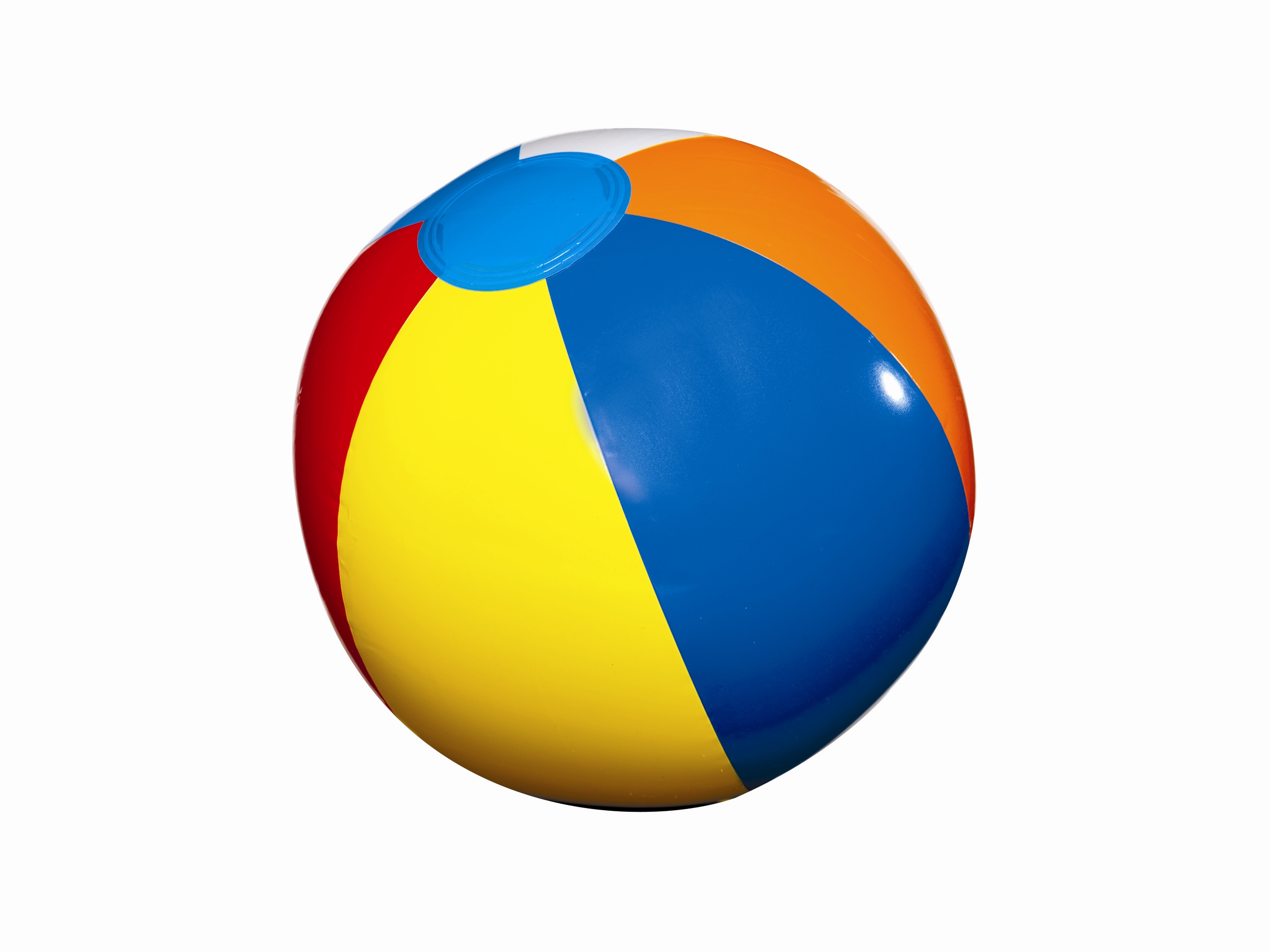
Note: a regulation dodge ball is replaced by a 8" in diameter Beach Ball which
when thrown has a tendency to veer off target adding to the fun.
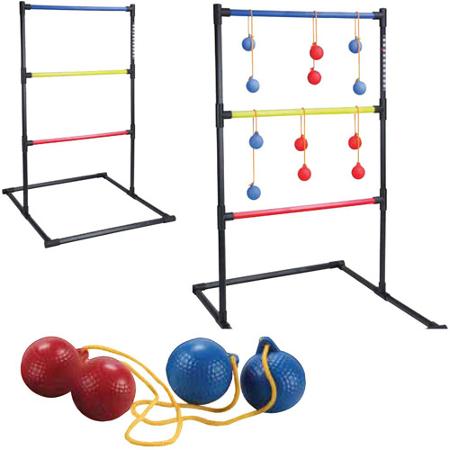
Ladder Ball
Get a friendly
competition going at your next family reunion or tailgate party with the
Maranda® Ladderball Pro Steel Game. Featuring two steel ladder systems, this
Maranda® game is sure to provide long-lasting fun. Stand 25' away from the
ladder and toss the bolas to score points by landing on the ladder's bars.
The first player or team to reach 21 points wins. Put this classic backyard
game in the carry bag for easy storage and travel.
FEATURES:
-
Ladderball game
-
Easy to play, highly
portable game
-
Great for picnics,
backyard BBQs, tailgating, and family reunions
-
Play with 2-4 players
or on teams
-
Toss bolas on the
ladder from 25' away
-
Score points when you
land bolas on the ladder
-
Top blue bar of the
ladder is worth 3 points, middle red bar is worth 2 points, and bottom
white bar is worth 1 point
-
The first player or
team to reach 21 points wins
-
Comes with 2 steel
ladder systems
-
Equipped with 3 red
bolas and 3 blue bolas
-
Includes carrying bag
for convenient storage
-
Includes game
instructions
-
Ages: 8+
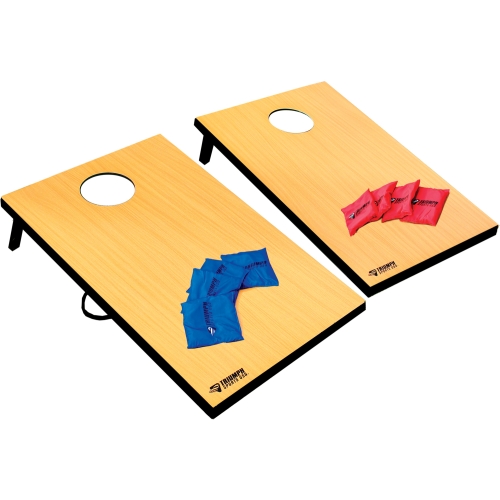
Bean Bag Toss
For next level
competition in the backyard or outside the stadium, set up the Triumph
Sports® Advanced Tournament Bean Bag Toss. Featuring two sturdy and compact
bean bag targets, these boards are melamine laminated for durability and
preventing moisture damage. Toss the 6" x 6" microfiber bean bags in the
opponent target to score. Velcro pads on all four corners of each board
connect them together and a rope handle allows for easy travel.
FEATURES:
-
Bean bag toss
-
Equipped with 2 35.5"
x 24" x 9.5" bean bag targets
-
Features sturdy and
compact construction
-
Top board of bean bag
targets are made with 4mm MDF
-
Bean bag target frame
is constructed with 15mm MDF
-
Leg are built with
18mm solid pine
-
Melamine laminated
tops, backs, and sides to ensure durability
-
Board material
resists chipping and peeling
-
Put the boards
together with Velcro pads on all four corners of each board
-
Easily transport with
braided rope handles
-
Comes with 8
micofiber 6"x 6" bean bags
-
Dimensions: 35.5" x
24.0" x 9.5"
Three-Legged Race
Materials Needed – Some short pieces of rope.
How to Play – Divide up into teams of two. Tie the right leg of one teammate to the left leg of the other teammate. Now try to run the race. Hopefully they’ll gradually get in sync and it won’t be quite as hard to make it
there. Only
running or walking is allowed. Any pair not running/walking will be immediately
disqualified.
Variation – Tie five people together and see what happens. Keep moving the numbers up until you have all the kids on two teams, all tied together.
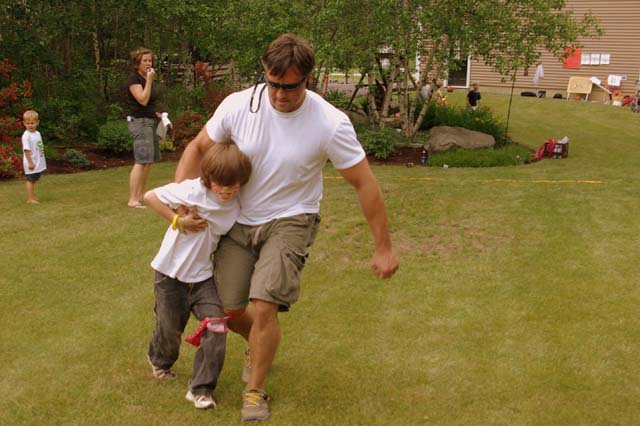
Three-Legged Race
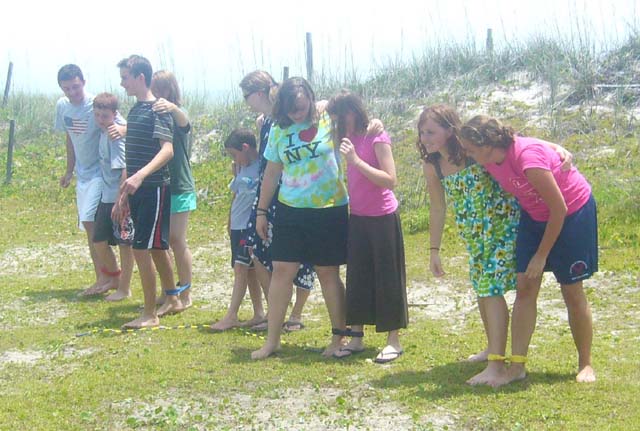
Three-Legged Racers
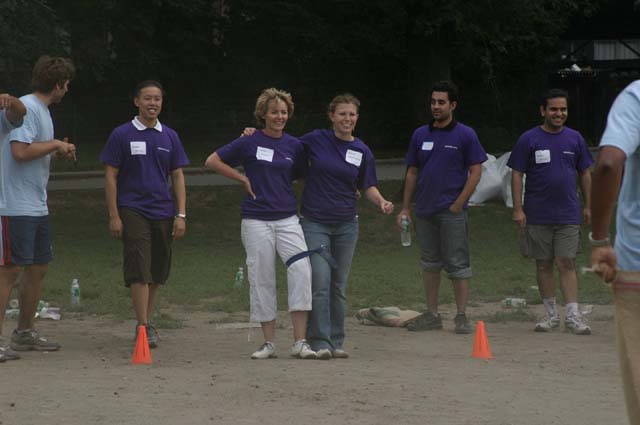
Corporate Three-Legged Race
Potato / Black Sack Race
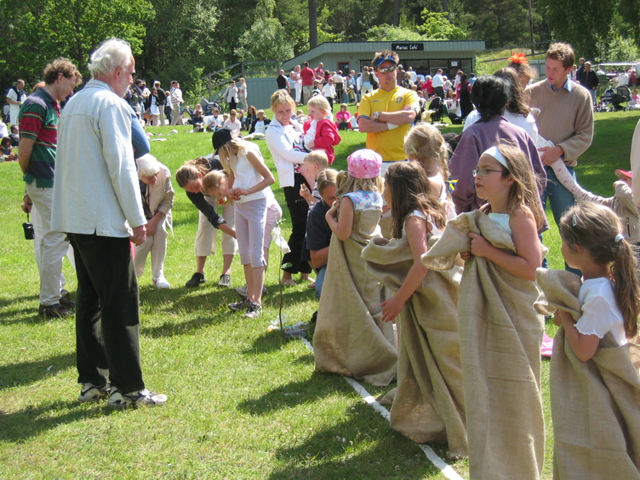
Materials Needed: One sack per participant. It can be a
potato sack or a black garbage bag.
How to Play: Everyone lines up on the staring line. The sacks are placed
5 to 10 feet in front of them. On the "Go" signal, players rush to
their sacks, pull it over both feet and proceed to hop towards the finish line.
You must have both legs in the sack. At least one hand must be on the sack at
all times and the first person to cross the finish line wins!
Variation: Put weights in the bottom of the sacks.
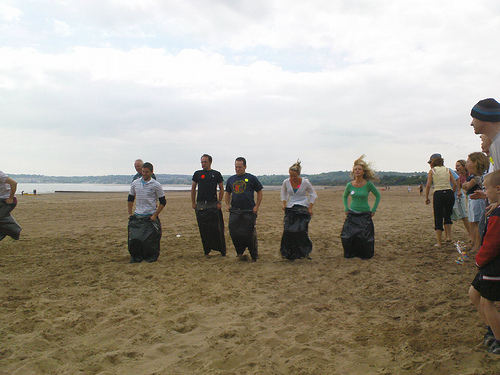
Corporate "Black Sack" Race
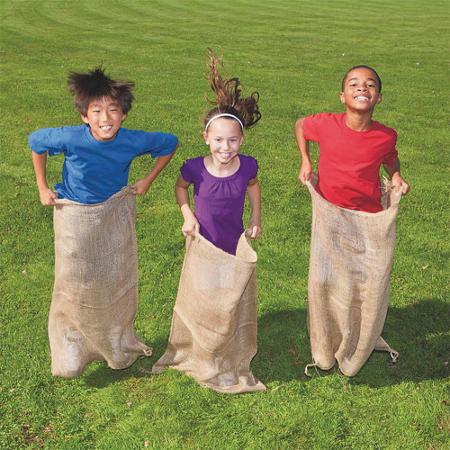
Potato Sack Racers
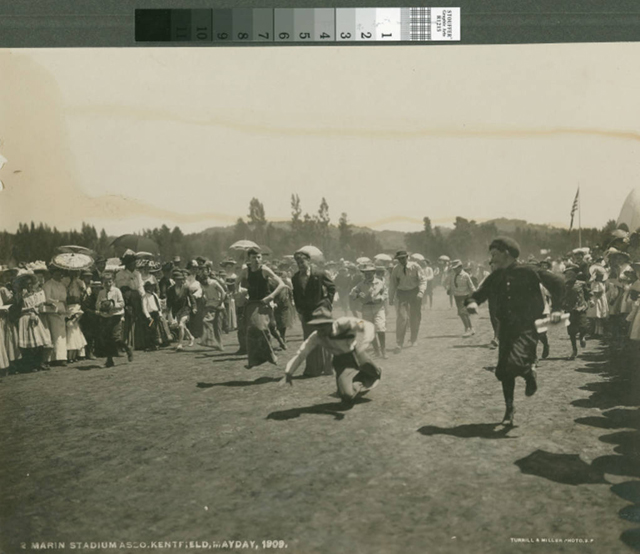
Turn Of The Century Sack Race
Water Balloon / Egg Toss
Materials Needed:
One water balloon or raw egg for each pair.
How to Play: Divide up into teams of two. Have them stand, facing each other, two or three feet apart. Pass out the
water balloons or eggs, one to each team. Have the player with the balloon or egg throw it to his/her teammate. After the toss, every team with an unbroken egg is still in the game. Have each team member take one giant step backwards (away from his/her teammate) and toss the egg again. Repeat this until only one team has an unbroken egg.
Variation: Fill the balloons up with food coloring and water. (If
you want to rig it so the boss wins you can actually give him / her a hard
boiled egg.)
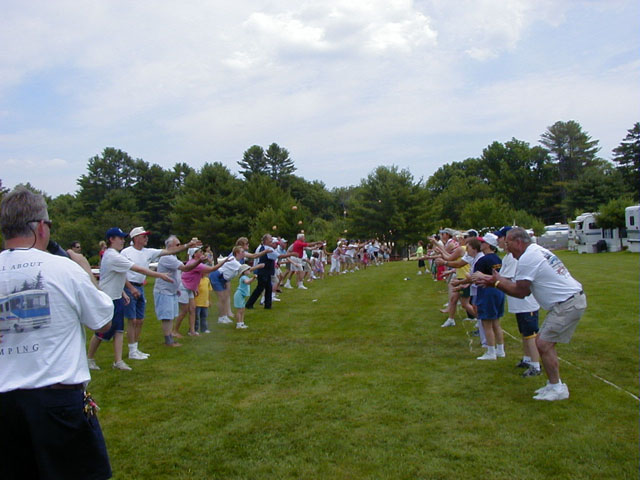
Egg Toss
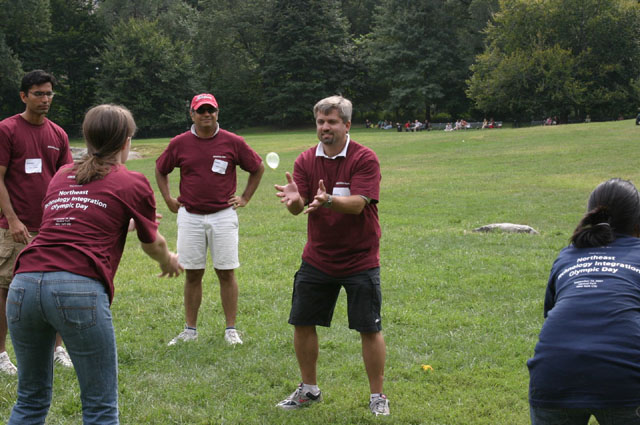
Balloon Toss
The Game of Horseshoes
Materials
Needed: One or Two stakes/pits, each stake being 40 feet across from each other.
How To Play: Normally two opponents face off in a game of horseshoes. There are two ways a game of horseshoes can be played: total innings or first to reach a certain score (such as
15.) Before the first inning begins the two competitors must coin flip or a pre-game horseshoe toss whereby whoever tosses his horseshoe closest to the stake gets to pitch first.
The first person should toss two horseshoes at the opposite stake, and while doing so his feet are not permitted to move beyond 3 feet of the nearby stake (or pitching point if you're playing a one-stake game).
Once the first pitcher has finished tossing his two horseshoes it's time for him to step back and allow his opponent to do the same.
In order for a pitch to count, the horseshoe must land within 6 inches of the stake; any throws that fall outside this distance are ineligible for scoring. Scoring can take place in one of two ways: ringing (encircling the stake with your shoe) or landing your horseshoe closest to the stake.
A ringer is worth 3 points. Tossing your horseshoe closest to the stake is worth one point. The priority goes to any horseshoe that actually touches (or leans) against the stake; if none of the horseshoes are actually touching then the closest is determined by distance. If by chance a competitor scores both of the closest horseshoes then he is awarded 2 points instead of the normal one.
Anytime both opponents land horseshoes that are equally close to the stake they cancel each other out – no score is given. The same holds true for ringers; if both parties score a ringer then no points are awarded for that particular ringer.
Once the points for the inning have been calculated both players will pick up their shoes and start a fresh inning.
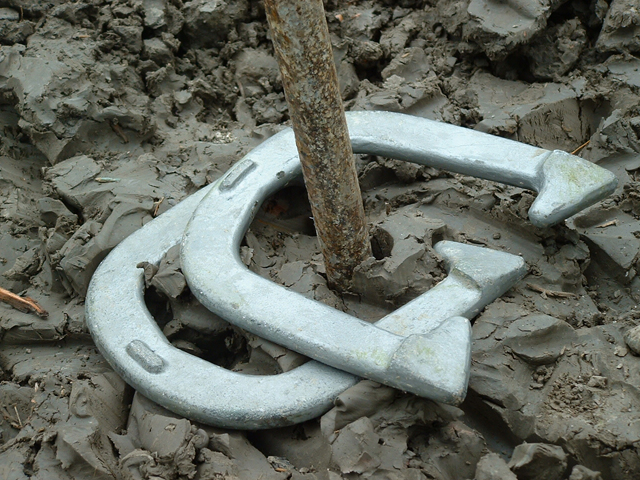
The Horse Shoes
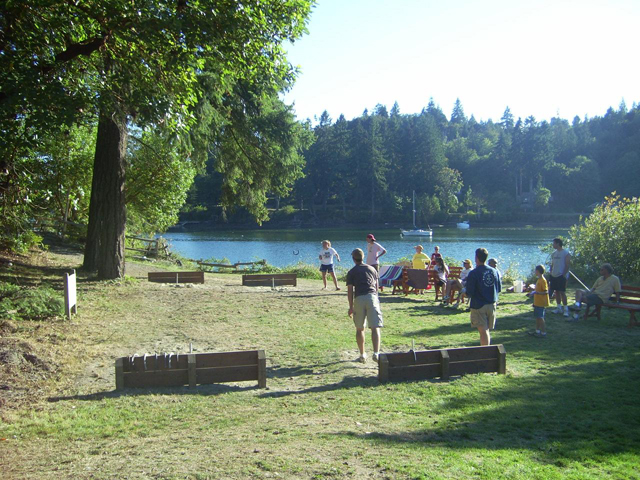
A Game of Horse Shoes
Kickball
Materials Needed: An open field,
bases and a kickball.
How To Play: The rules for kickball are closely related to those of baseball. Kickball is played on a field with 4 bases arranged on the corners of a diamond-shaped "infield".
T the "bases" can be "a patch of rocks", "a smashed tin can",
"a cool shaped stick" or anything that can be used as a marker. Player positions are also similar to those of baseball. There is an "infield" and an "outfield." The infield contains the positions that involve the bases, while the outfield is mainly designated to catching or retrieving the ball when it is kicked out of the infield. Actual playing positions vary depending on the number of kids that are actually playing. If there are only a few children playing, the positions are usually spread out, but if there are a good number of players, kids will position themselves wherever there is space ( and no cooties ). Game play goes as follows: the ball is rolled towards home plate, and the player which is up ( kicking ), tries to kick the ball . If the ball is caught in the air, the kicker is out. A player is also out if the ball is thrown at them, and hits them while they are not touching a base. If a thrown ball misses them, they may only run to the next base, which is known on the kickball field as the "one base on an overthrow" rule. Also similar to baseball, if the ball is thrown to the first base man, and it is caught by the first base man while he/she/it is touching first base, the player running to first base is out. This is known as a "forced out" in that the runner was forced to run to that base. A "forced out" can occur on any base that a runner is forced to run to. Once a team gets 3 outs, the teams switch sides. A team gets one point for having a runner make it all the way around the bases and back to home base.
The game is over when the school bell rings, the ball pops, or the ball is lost in such acts as kicking the ball into the street or onto the roof. At the end of the game, the team with the most points wins. However, if a team loses the ball by kicking it one the roof etc., that team automatically loses. Also, the kid that did it becomes instantly unpopular.
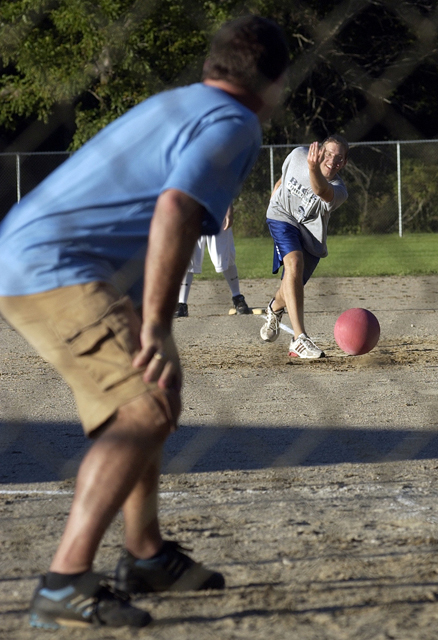
A Game of Kickball
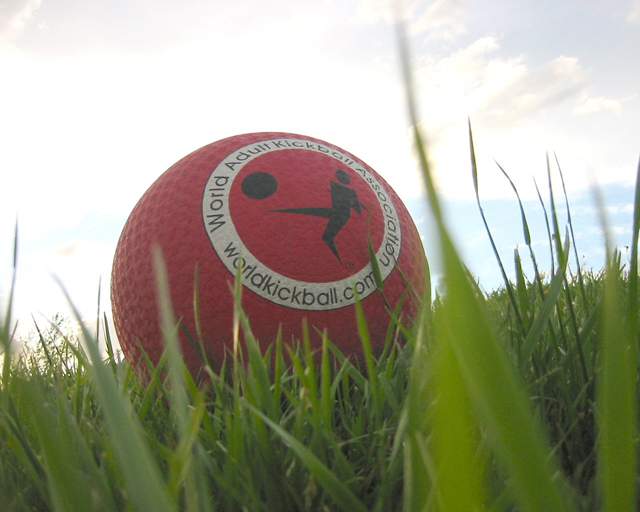
Official Kickball
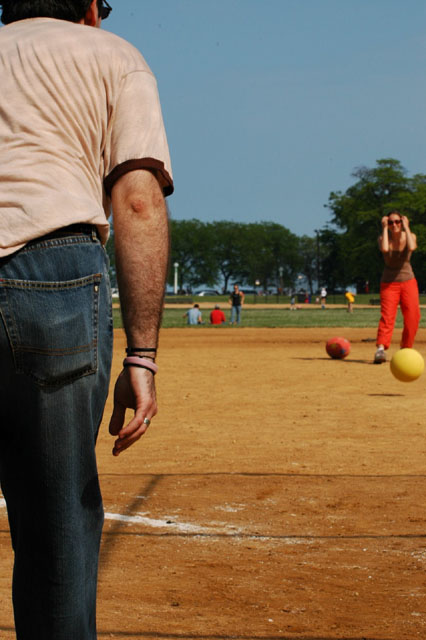
A game of Kickball
Tug-O-War
Materials Needed: A rope with a
marker on it.
How To Play: Split up into two teams. Each team stands at opposite ends of
the rope and everyone grabs the rope. On the "Go" the teams pull on
the rope and whoever pulls the marker on the rope past a certain deignated point
that team wins.
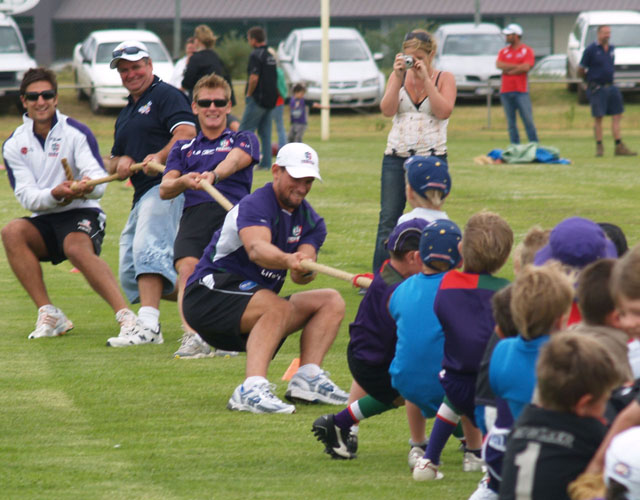
Adults vs. Kids in Tug-O-War
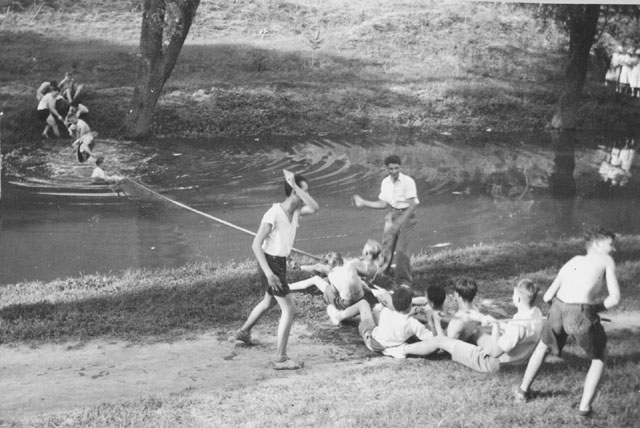
Old Game of Tug-O-War
Wiffle Ball
Materials Needed: Wiffle Ball, Wiffle
Bat, field to play on.
How To Play: The game is played a lot like baseball. The official count is 6 balls and 3 strikes.
A batter may have unlimited foul balls however a foul that hits the object strike zone with 2 strikes on the batter is considered strike 3.
Pitching speed is "medium" 35 mph maximum. A team only needs 2 players present to play. A maximum of 3 on the field and 5 batters.
Any ball fielded without touching the ground after initial contact is an out. Games are 6 innings in length.
Any team that is behind by 10 or more runs after batting in the 4th inning will lose by mercy rule.
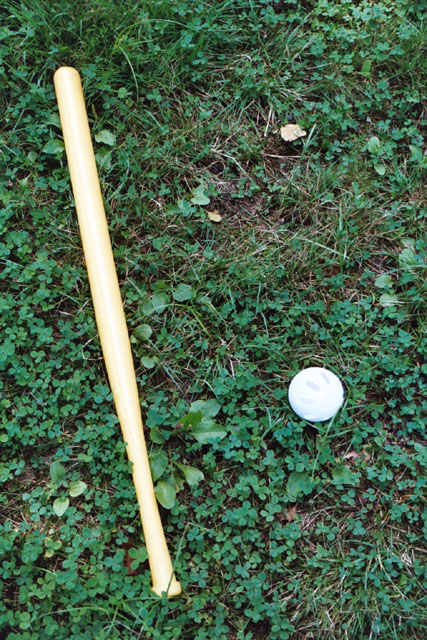
Wiffle Ball and Wiffle Bat
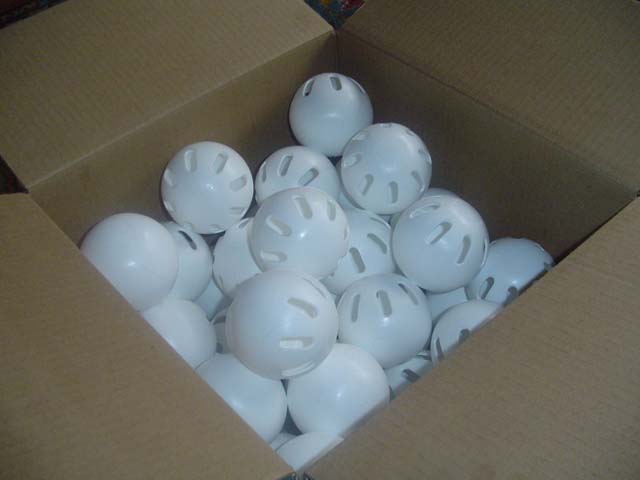
Box of Wiffle Balls
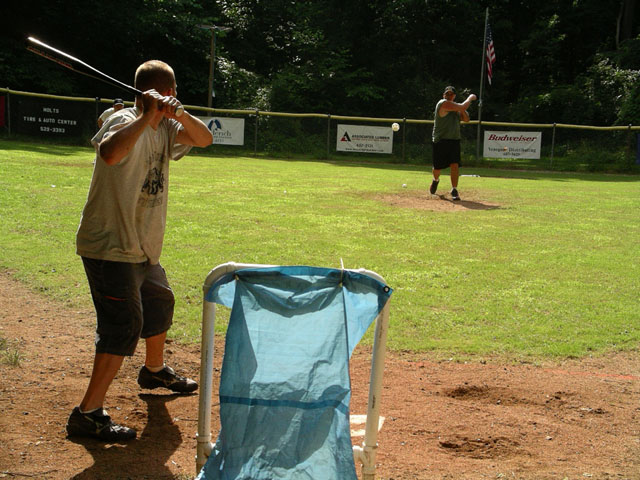
The game of Wiffle Ball
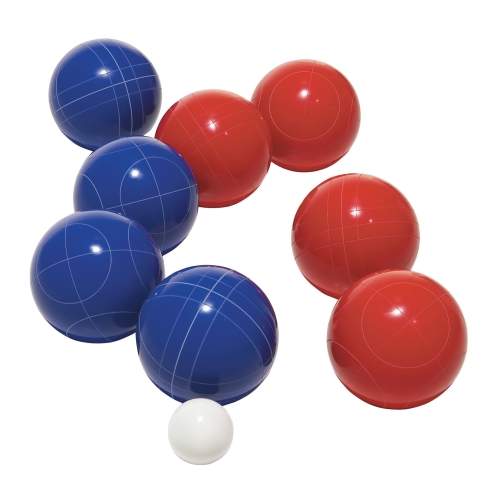
Bocce
ack up the Quest® 90mm
Club Level Bocce Set for a day at the beach or afternoon in the backyard.
This set comes with eight 90mm etched resin bocce balls and one 41mm resin
pallino. All game materials can be easily contained and transported in the
included storage bag. Created for the competitive player, the Quest® Bocce
Ball Set comes with measuring tape for all those "too close to call" shots.
FEATURES:
-
Official 90mm
recreational bocce set
-
Eight 90mm etched
resin bocce balls
-
One 41mm resin
pallino
-
Durable 600 denier
zippered storage bag
-
2 - 4 players
-
Perfect for the
backyard or beach
-
Instructions & game
rules included
Volleyball
Volleyball is a
team sport in which two teams of six players are separated by a net. Each
team tries to score points by grounding a ball on the other team's court
under organized rules.
The complete
rules are extensive. But simply, play proceeds as follows: a player on
one of the teams begins a 'rally' by serving the ball (tossing or releasing
it and then hitting it with a hand or arm), from behind the back boundary
line of the court, over the net, and into the receiving team's court. The
receiving team must not let the ball be grounded within their court. The
team may touch the ball up to 3 times but individual players may not touch
the ball twice consecutively. Typically, the first two touches are used to
set up for an attack, an attempt to direct the ball back over the net in
such a way that the serving team is unable to prevent it from being grounded
in their court.
The rally continues, with
each team allowed as many as three consecutive touches, until either (1): a
team makes a kill, grounding the ball on the opponent's court and
winning the rally; or (2): a team commits a fault and loses the
rally. The team that wins the rally is awarded a point, and serves the ball
to start the next rally. A few of the most common faults include:
-
causing the ball to
touch the ground or floor outside the opponents' court or without first
passing over the net;
-
catching and
throwing the ball;
-
double hit:
two consecutive contacts with the ball made by the same player;
-
four consecutive
contacts with the ball made by the same team;
-
net foul: touching
the net during play;
-
foot fault: the foot
crosses over the boundary line when serving.
The ball is usually
played with the hands or arms, but players can legally strike or push (short
contact) the ball with any part of the body.
A number of consistent
techniques have evolved in volleyball, including spiking and
blocking (because these plays are made above the top of the net, the
vertical jump is an athletic skill emphasized in the sport) as well as
passing, setting, and specialized player positions and
offensive and defensive structures.
Badminton
Badminton is a
racquet sport played by either two opposing players (singles) or two
opposing pairs (doubles), who take positions on opposite halves of a
rectangular court divided by a net. Players score points by striking a
shuttlecock with their racquet so that it passes over the net and lands
in their opponents' half of the court. Each side may only strike the
shuttlecock once before it passes over the net. A rally ends once the
shuttlecock has struck the floor, or if a fault has been called by either
the umpire or service judge or, in their absence, the offending player, at
any time during the rally.[1]
The shuttlecock is a
feathered or (mainly in noncompetitive matches) plastic projectile whose
unique aerodynamic properties cause it to fly differently from the balls
used in most racquet sports; in particular, the feathers create much higher
drag, causing the shuttlecock to decelerate more rapidly than a ball.
Shuttlecocks have a much higher top speed, when compared to other racquet
sports. Because shuttlecock flight is affected by wind, competitive
badminton is played indoors. Badminton is also played outdoors as a casual
recreational activity, often as a garden or beach game.
From small picnics to the biggest Corporate
Events...
Atlantic Coast Entertainment...
still continues to be in very high demand for their innovative party
options. A.C.E.
can custom tailor your next function to your particular companies taste in entertainment,
fun and GAMES!
It doesn't matter if your group is on the conservative side or ready for an
off the wall throw down, Atlantic Coast Entertainment can help you design a party that they will
be talking about for years to come. Choose the right entertainment options for your organization
and if you need more of a certain type of game we can accommodate that as well.
If you have any questions...just give us a call.
Pricing
| Description |
SKU # |
Price |
| 4 Hour Picnic DJ / Entertainer Basic |
4hrPDJB07 |
499.00 |
| 5 Hour Picnic DJ / Entertainer Basic |
5hrPDJB07 |
599.00 |
| 6 Hour Picnic DJ / Entertainer Basic |
6hrPDJB07 |
699.99 |
| Extra Hour Picnic DJ / Entertainer |
ExtraHRPDJ-1 |
100.00 |
| 4 Hour Picnic DJ / Entertainer with Assistant |
4hrPDJD-4 |
699.99 |
| 5 Hour Picnic DJ / Entertainer with Assistant |
5hrPDJD-5 |
799.99 |
| 6 Hour Picnic DJ / Entertainer with Assistant |
6hrPDJD-6 |
899.99 |
| Extra Hour Picnic DJ / Entertainer with Assistant |
ExtraHRPDJ-2 |
200.00 |
| Kan Jam (Set of 2 with Cans and Frisbee) |
KANJAM |
50.00 |
| Dodgeball (Regulation) (Set of 6 Regulation Balls) |
DBR |
50.00 |
| Dodgeball (Balls of Fury) (Set of 1 Dozen 8" Beach
Balls) |
DBBOF |
25.00 |
| Ladderball (Set of 2 with stands and bolos) |
LB |
50.00 |
| Bean Bag Toss (Set of 2 with scoreboards and beanbags) |
BBT |
50.00 |
| Three Legged Race (Set of 20 velcro leg ties) |
TLR |
50.00 |
| Sack Race (Set of 25 burlap woven sacks) |
SR |
75.00 |
| Egg / Water Balloon Toss (per dozen eggs) / (per 200
water ballons) |
ET |
5.00-25.00 |
| Horseshoes (Set of 2 with 2 steel stakes and 4 steel
horse shoes) |
HS |
50.00 |
| Kickball (Set of 2 Kickballs) |
KB |
25.00 |
| Tug of War |
TOW |
10.00 |
| Wiffle Ball (set includes wiffle ball, bats and bases) |
WB |
15.00 |
| Bocce (includes 2 sets of high quality Bocce Balls) |
BB |
50.00 |
| Volley Ball (Includes High quality Net, Poles, Stakes
and Balls) |
VB |
75.00 |
| Badminton (Includes High quality Net, Poles, Stakes, 4
racquets and 4 shuttlecocks) |
BM |
75.00 |
| Hula Hoop Contest (30 Hula Hoops of various sizes) |
HHC |
50.00 |
| Grand Picnic (Your choice of games and A.C.E. staff to
setup and help run them) |
GP |
CALL |
| Other Options |
|
|
|
Game Show / Lock Out Box for 4 Contestants |
GSLB |
250.00 |
|
Game Show / Face Off Podium (Family Feud Style) |
GSFF |
350.00 |
|
Karaoke with over 10000 Titles with Mini Karaoke System |
Karaoke-1 |
275.00 |
|
Bubble Blast (100's of Bubbles Per Minute...Perfect for Picnic's
& the Outdoors) |
BB |
250.00 |
|
Bubble Machine (Basic Bubble Machine) |
BM |
75.00 |
Looking to add some extra fun...check out our available
Add
On's
|